


|
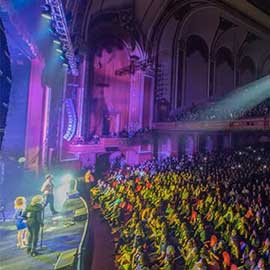
The Pabst Theater Box Office Hours: Noon-6:30 p.m. Monday–Friday and two hours before scheduled start times of events. For the convenience of our customers, free 15-minute parking is available in the Milwaukee Center underground garage (entrance off Water Street). Present your parking voucher at the box office for validation. Buy a night of show parking pass for only $5 with ticket purchase! The Pabst Theater is a City of Milwaukee Landmark, a State of Wisconsin Historical Site, and a National Historic Landmark. History of The Pabst Theater Milwaukee’s jewel box, The Pabst Theater, was built in 1895 by brewing magnate Captain Frederick Pabst, (left) and was designed by architect Otto Strack in the tradition of the great European opera houses. Its opulent Baroque interior includes an Austrian crystal chandelier, a staircase crafted from white Italian Carrara marble, and a proscenium arch — highlighted in gold leaf — framing the stage. The Pabst Theater rose from the ashes of a theater known as Das Neue Deutsche Stadt-Theater (The New German City Theater), which had been built by Captain Pabst in 1890. When informed of the fire while on vacation in Europe in 1895, Captain Pabst reportedly cabled "Rebuild at once!" In a remarkably short time — just 11 months — the theater was rebuilt. The new building had many innovations that were later copied by other theaters. State-of-the-art fireproofing measures included having a superstructure of cast iron and concrete — with only the stage floor and window frames constructed of wood — and the traditional "fire curtain" (which can be lowered to separate the audience from the stage) was a unique fabrication of wire mesh designed to outlast most any fire. Semi-cantilevered construction for the balcony and gallery eliminated view-blocking columns common to theaters of the day, and backstage the theater boasted the first use in the city of a complete permanent steel counterweight system to fly scenery and draperies, and the first use of an all-electric lighting system in the United States. The theater repeated an element that had been present in the Stadt: the use of names of notable artists inscribed about the cornice of the drum-shaped auditorium. At the Stadt, the names had been of German notables; at the Pabst, other nations are represented as well. The dominant ornament in the auditorium is a seven-foot tall statue of Apollo, flanked by the muses of Drama and Song, upon the apex of the proscenium arch. The theater was extensively renovated in 1928, then restored to its original style in 1976, making it one of the most beautiful theaters in the United States. With a full proscenium stage that includes a hydraulic orchestra pit, the theater is suitable for virtually all performing arts including theater, opera, dance, and music. The auditorium is drum shaped with two balconies, and stunningly decorated in reds and maroons with gold and silver accents. A magnificent crystal chandelier that weighs over two tons hangs over the auditorium. Measuring twelve feet in width by sixteen feet high, it is lowered to seat level once a year so that its 33,000 running inches of Austrian crystal can be cleaned. In 1989, The Pabst Theater was connected to the new $120 million Milwaukee Center, which includes the Milwaukee Center office tower, Wyndham Hotel, and the Milwaukee Repertory Theater. A walk down the colonnade that links the theater to the center is like a walk back in time, as the ceiling becomes higher, the decorative columns change from modern to more ornate, and the lighting adjusts from modern and indirect to Austrian crystal fixtures at the entrance to the theater lobby. Along the way, displays of memorabilia from the early decades of the Pabst Theater line the walls, including displays titled "Leading Ladies," "Music Makers," "Voices," "Wisconsin’s Own," and "Lunt and Fontanne." The latest renovations to the theater, begun in 2000, were designed to increase patron comfort and make the theater fully accessible to handicapped and elderly patrons. Two elevators were installed, accessing all five floors of the theater. The Gallery was remodeled with 300 larger, plush, seats put in to replace 398 notoriously uncomfortable straight-back seats. The theater’s ventilation system was modernized, more restrooms were added, and the lobby was expanded to include Cudahy’s Irish Pub, which opened in September 2001 and offers pre-event and intermission cocktails. The Pub, surrounded by glass to look like an outdoor patio, also is available for rentals. Today, The Pabst Theater is the centerpiece of Milwaukee’s downtown theater district…a magnificent example of architecture of another time and era that serves performers and audiences of the 21st century as it did at the turn of the 20th century. Pabst Theater Historic Preservation Fee Statement The Pabst Theater has been designated as a City of Milwaukee Landmark, a State of Wisconsin Historical Site, and a National Historic Landmark. Built in 1895, The Pabst is the fourth oldest continuous operating theater in the United States. A major renovation restoring the theater to its original beauty was completed in 2001. The Historic Preservation Fee will ensure The Pabst Theater’s status as a beautiful, National Historical Site.
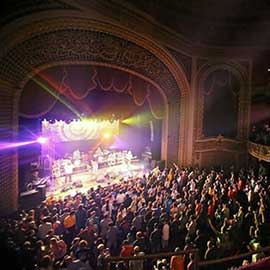
The Riverside Theater Box Office Hours: Noon-6:30 p.m. Monday–Friday and two hours before scheduled start times of events. History of The Riverside Theater The Riverside Theater is probably the most graceful, if not the most opulent of Milwaukee’s theatres and it comes by its name, honestly, by fighting since opening on April 29, 1928, to keep the adjacent Milwaukee river out of its basement. When the RKO (Radio-Keith-Orpheum) vaudeville circuit was looking for a larger, fancier venue to replace their 1908 Majestic Theater, they bought into the firm demolishing the old Empire Hotel and Tavern at the prominent intersection of Grand Avenue (now Wisconsin Ave.) and West Water Street (now Plankinton Ave.) to build the Riverside within the new 12-story Empire office building with an alley and the river forming the other two boundaries. Vaudeville was on the decline by this time, so the theatre envisioned as a presentation house with 2,558 seats on the orchestra level plus three boxes on each wall below the organ screens and in a huge balcony reached by a lobby elevator. Local architects Charles Kirchoff and Thomas Rose had done well in designing the famous Palace Theatre in New York City, so they were selected to bring about this French baroque vista in colors of ivory and gilt with peacock blue accents. A mixture of vaudeville and films continued for years until Warner Bros. took over for a brief period until their own opulent Warner (now called the Grand) was completed in 1931, just two blocks away. The ceiling features a giant central dome with tri-color cove lighting nicely concealed by an ornate rim of cabochon-faced crests. The original Grand Drapery graced the proscenium arch with 20 swags of teal velour with galloons in ochre and tassels in henna red upon a lambrequin of Austrian folds decorated in beige and fringed in henna. Behind and below this the beige teaser curtain hung in swags and jabots while the tormentors were in beige framed in teal galloons and bullion-style fringe. Tragically, all of this beauty perished in 1966 when a patron tossed a cigarette onto the stage and it all disappeared in the ensuing fire. Automatic sprinklers back stage saved the structure until the firemen came, and eventually a simple panel of 30% fullness dark red duvetyn replaced all this when the estimated cost to replace originals came in at $590,000. When United Artist opted not to renew their expiring lease in 1982, and local real estate developers had already drawn up plans for a shopping mini-mall or large parking structure, a grassroots “Save the Riverside” campaign was started as part of the growing downtown revitalization movement. After local support grew for the preservation of the Riverside, local philanthropist Joseph Zilber, who enjoyed many programs at the venue in his youth, agreed to fund the $1-1/2 million needed to repair and revitalize the building. The theater eventually held its grand re-opening in 1984 to showcase the gorgeous newly lighted, gilded, and re-draped auditorium. Even the long-neglected organ was given a substantial makeover, further displaying the new and improved Riverside. The theater underwent an artistic renovation, when in October of 2005, The Riverside Theater Foundation (an arm of The Pabst Theater Foundation) leased the venue and began promoting and marketing performances there. Since that time, performances at The RIverside have more than tripled and the quality of the artists has exceeded anytime in it’s history. Artists ranging from Sheryl Crow, Oasis, Eddie Vedder, Bob Dylan, Willie Nelson and many, many more have since graced the stage. The future now looks bright as the Riverside Theater Foundation has increased performances every year of their existence at this beautiful theater.
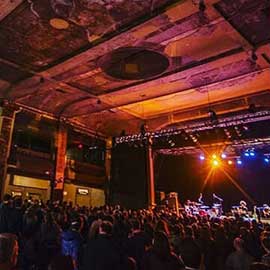
Turner Hall Ballroom Box Office Hours: Tickets are available in person at the Pabst and the Riverside Theater’s box offices M – F Noon – 6:30 and at Turner Hall on show nights ONLY History of Turner Hall Ballroom Located within Milwaukee’s Turner Hall, a National Registry of Historic Places and designated National Historic (and Local) Landmark, Turner Hall Ballroom is a two-story, 7,000-plus square feet space with a 31-foot by 56-foot raked stage on the east end and an expansive balcony that sweeps around the west and north ends. Since the late nineteenth century, the Ballroom has played host to a wide range of social, cultural, and political events. Turner Hall was a showplace for the panoramic painters and other German immigrant artists who dominated the Milwaukee art scene until the 1920’s and throughout the early 1900’s; Milwaukee residents visited this space for weekly concerts, dances, gymnastic competitions and theatrical presentations.
|
HISTORY: Pabst Theater | Riverside Theater | Turner Hall
FILMED AT THE PABST | RIVERSIDE | TURNER
ON TV
OTHER
COMING SOON
|